A Reckoning Is Coming in Enterprise Software. Here's What Shipping Companies Need to Know.
By Bill Dobie, Founder and CEO
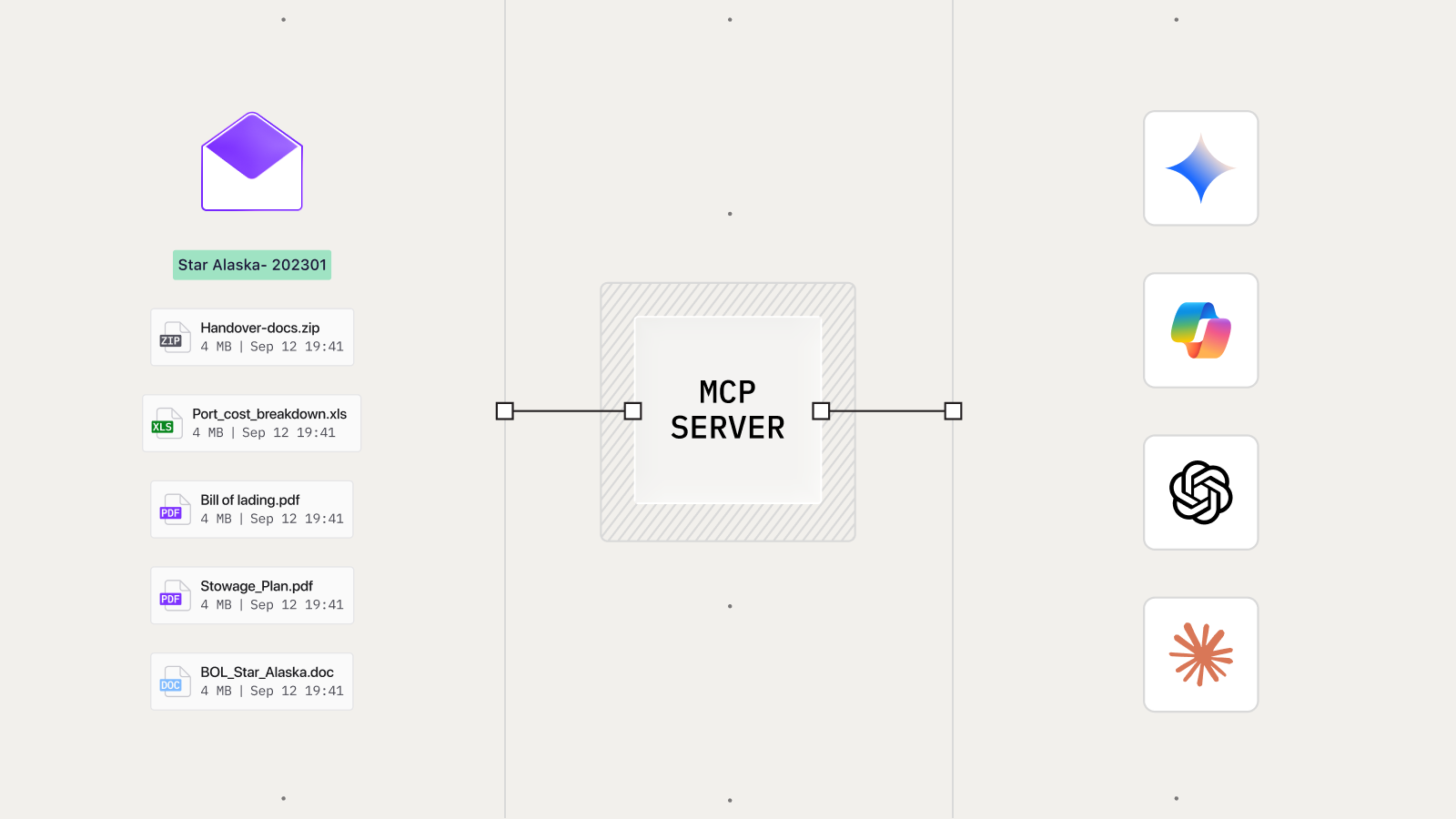
Every customer conversation I've had in the last two months has landed in the same place. AI. Not the theoretical kind. The "what do I actually do on Monday morning" kind.
I recently read a piece by Nicolas Bustamante, a founder who spent a decade building vertical software companies and is now competing directly with them using AI-native tools. His thesis is stark: a reckoning is coming in enterprise software. A lot of companies are going to discover that their product was just an interface layer over data that isn't theirs. When AI agents can query that data directly, the interface becomes worthless.
He's right. The market is already pricing this in. Nearly a trillion dollars has been wiped from software and services stocks in recent weeks. The S&P 500 Software and Services Index dropped 20% year to date. Companies that built empires on workflow complexity, not proprietary value, are watching that complexity become a liability.
But Bustamante also makes a critical distinction. Not all vertical software is exposed. The companies that survive own something AI agents can't replace: network effects, proprietary data generated through use, and deep embedding in the transaction itself. His survival test is simple. Does your software create a network? Does it sit inside the transaction? Does it generate data that wouldn't exist without it?
It's the right test. And it's worth being honest about why most enterprise software fails it.
Why most software doesn't survive
Most enterprise software solved an interface problem. It took a workflow that was chaotic, spread across spreadsheets and email threads and phone calls, and gave it structure. That was genuinely valuable. But the value lived in the structure, not in the data or the network underneath it. Strip out the interface and you're left with nothing proprietary.
AI agents don't need the interface. They can navigate complexity directly. What they need is context, and context has to be earned. You can't license it or scrape it. It only exists if you've been sitting inside the work, accumulating it, for years.
This is the uncomfortable question every shipping company should be asking their software vendors right now: what would you actually have if AI could access your data directly? Would there be anything left?
Why shipping is different
Shipping is fundamentally a conversation-driven business. Every fixture, every voyage, every cargo movement is negotiated, confirmed, amended and settled through communication. Millions of emails a day flow between counterparties who are already connected through this protocol. What makes shipping hard is exactly what makes it interesting for AI: structured workflows, high-stakes decisions, repetitive but nuanced communication, and the need to synthesise information from dozens of sources in real time.
As Owain Brennan, our Head of AI and Data, put it when sharing this perspective:
"Every day I sit at the intersection of maritime operations and machine intelligence. Shipping is unlike any other industry. Thousands of counterparties. Dozens of document types. Conversations that carry legal and financial weight bouncing through email at all hours across every timezone. For a long time, that complexity was the problem. Now it's the opportunity."
He's right. And the opportunity is real right now. Two weeks ago Anthropic released Claude Opus 4.6. We plugged it in and the results changed what we thought was possible.
But here's the thing: the results only changed because of what sits underneath. A decade of proprietary communication data. An API-first trade platform where calculation, distances, operations and settlement coexist with the communications flow. Shipping-specific context that no foundation model can replicate on its own. Claude Opus 4.6 is powerful, but powerful tools need real context to do real work. The foundation model is the engine. The data underneath it is the fuel.
What this means practically
If you're a shipping company right now, the question isn't whether to adopt AI. That decision is already made. The question is whether the platforms you're running on will give AI agents anything useful to work with, or whether they'll trap your data behind a vendor interface that was designed to keep you dependent, not to let you innovate.
The companies that survive the reckoning won't be the ones who moved fastest on the UI. They'll be the ones who own their data, their network, and their context. That means choosing platforms built open rather than closed, where your data is yours and accessible, not anonymised and sold back to you as market statistics. Where your partners can build and integrate directly. Where entirely new businesses can grow on the same foundation you're running on.
It also means starting. Experimenting. Getting AI into the real work, not into a sandboxed demo environment. The companies we see pulling ahead aren't waiting for a perfect strategy. They're learning by doing, and they're doing it inside their actual operations.
I've spent a decade investing in architecture that was sometimes hard to explain the ROI on before the moment arrived. But who thought a bookseller's biggest business would be infrastructure for the modern world?
Why the timing matters
The future of AI in shipping isn't about replacing people. It's about cooperation: agents, people and data working together towards safer, more profitable outcomes.
And cooperation is the very heart of shipping. From crew to shippers, agents, stevedores, inspectors, chandlers and regulators, dozens of participants come together in real time, thousands of times a day, to keep the world's cargo moving. Orchestration across a fragmented, high-stakes, time-sensitive network is not a problem AI needs to learn. It's a problem shipping has been solving for centuries. AI just does it faster.
The reckoning Bustamante describes is real. For shipping, it's also an opportunity that won't wait. The companies that recognise this moment for what it is, and build on foundations that are actually ready for it, will be very hard to catch.
Get in touch. Or talk to the people you've already met in the field. We will coach, train or build with you.