Speak to the Team



Protect the value of every voyage
Sedna VMS connects commercial, operational, financial, and compliance decisions, helping teams protect voyage margins from first estimate to final settlement.




Commit. Control. Close.
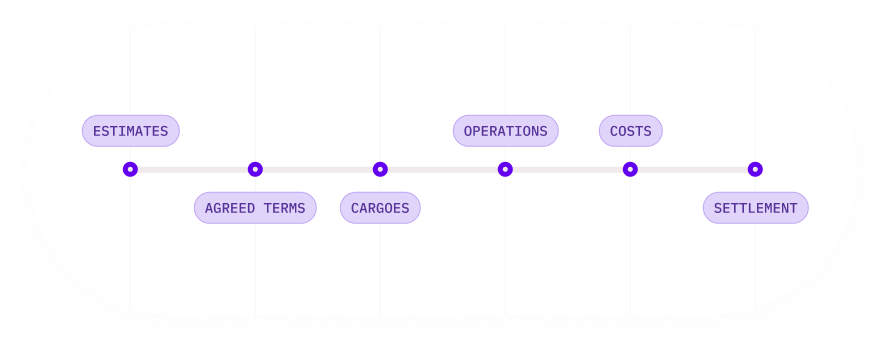
Move from commercial intent to operational reality and settlement without losing the context behind the voyage.
Estimate, compare and commit with confidence.
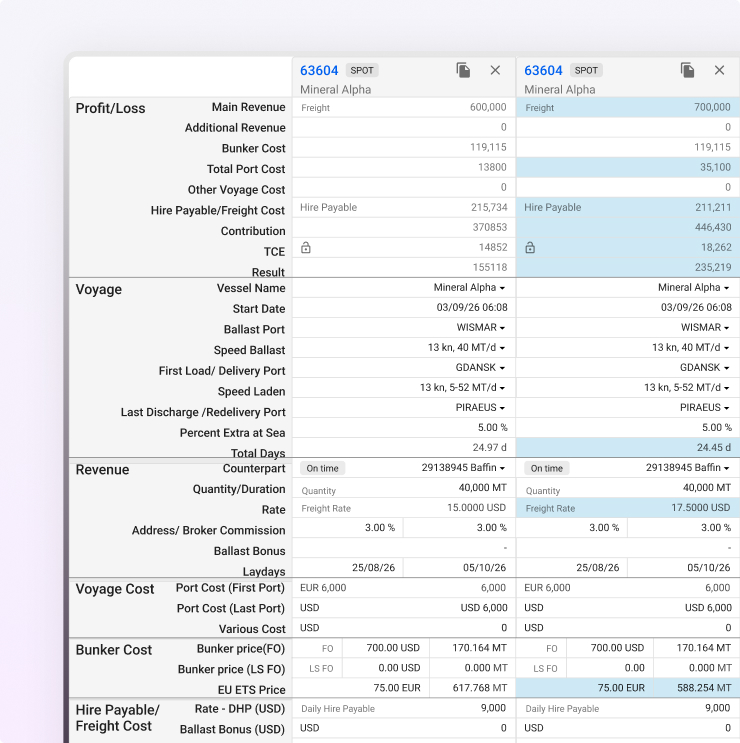
Build voyage estimates, compare commercial options and understand projected P&L, TCE, voyage costs and EU ETS exposure before moving the selected estimate into execution.
Compare the options
Build voyage estimates, compare scenarios, and evaluate alternative routes and schedules.
Account for compliance costs
Include estimated EU ETS exposure and allowance costs in the commercial calculation.
Test the economics
Understand expected TCE, margin, consumption, and emissions costs before committing.
Capture the commitment
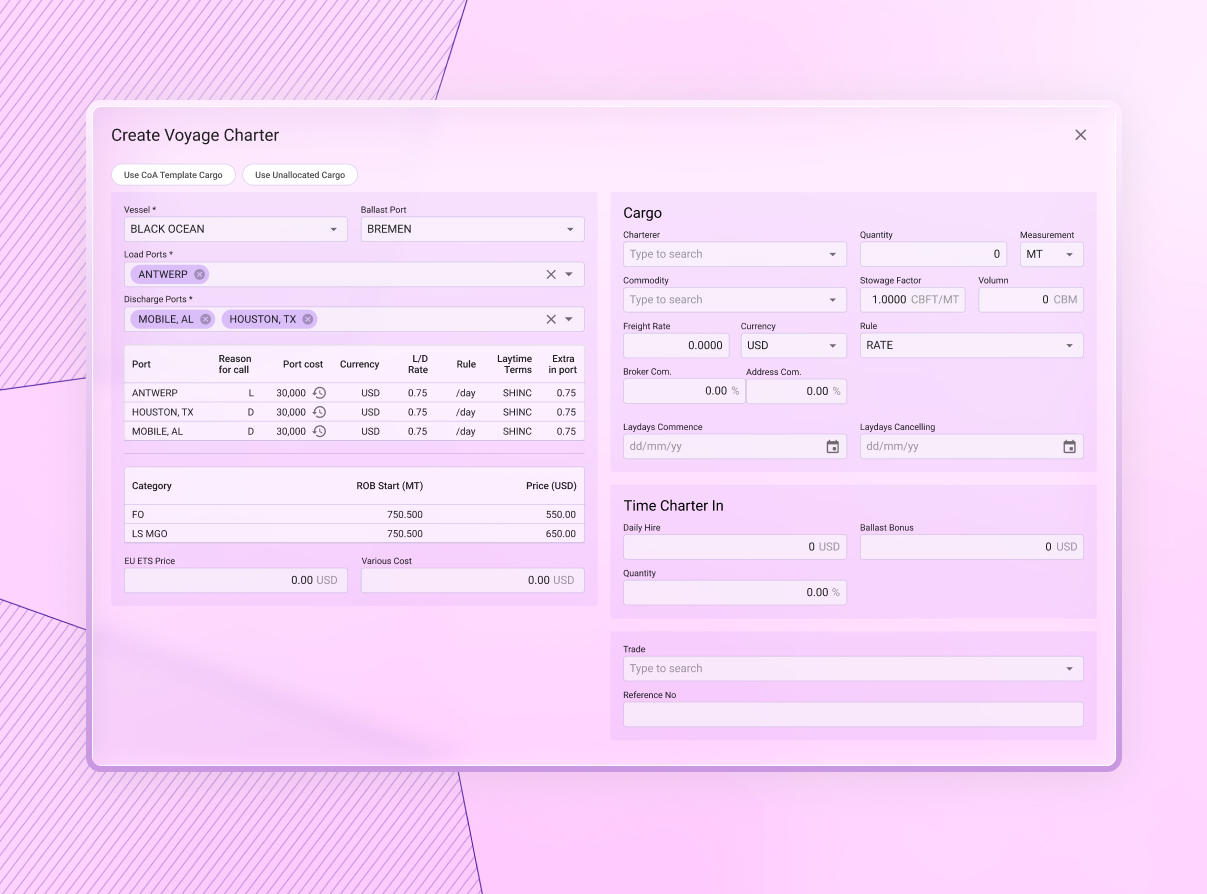
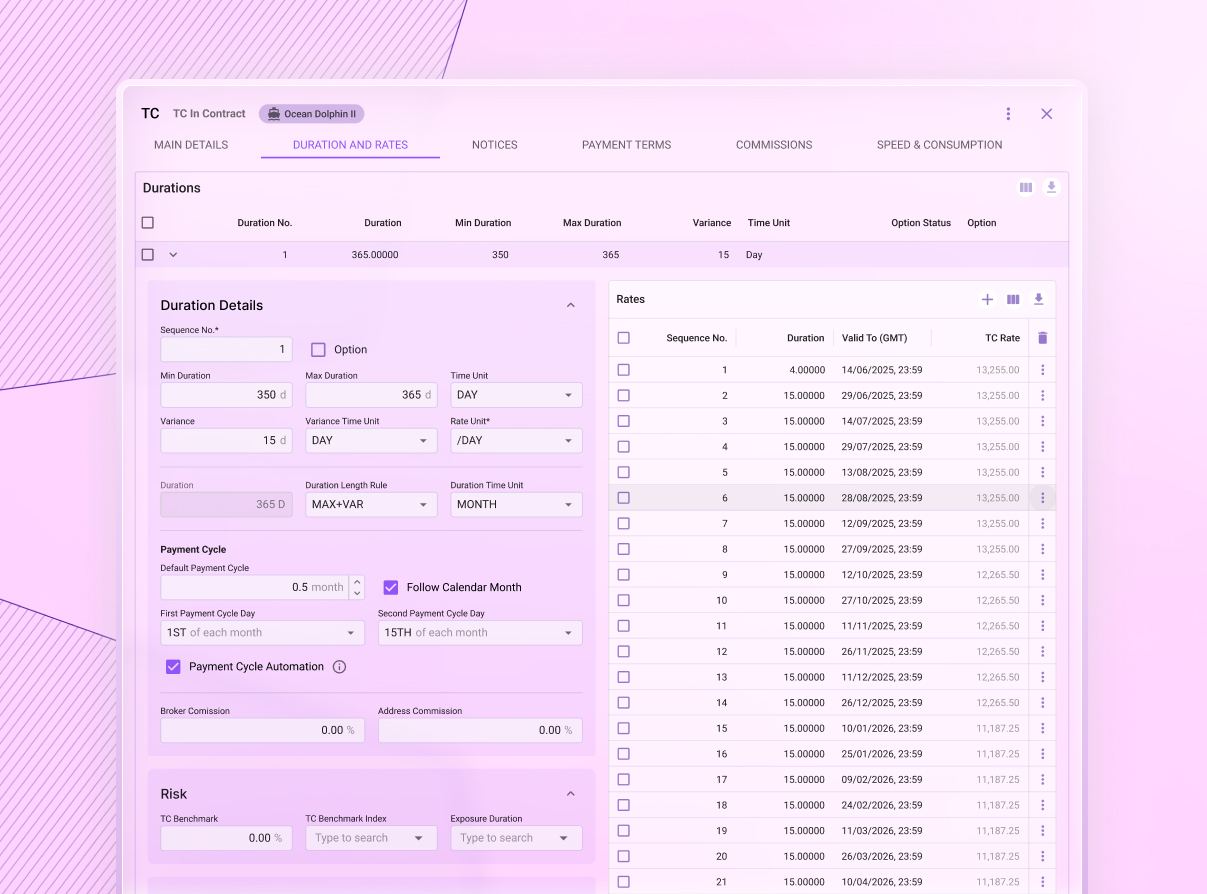
Capture voyage charters, COAs, time charters, relets and index-linked agreements, including how EU ETS and FuelEU costs will be settled with each counterparty.
Operate with the commercial picture in view.
See what was expected. Know what changed. Understand the commercial impact. Sedna VMS preserves the commercial thread between the original plan, operational reality, and the latest voyage result.
Keep the voyage plan current
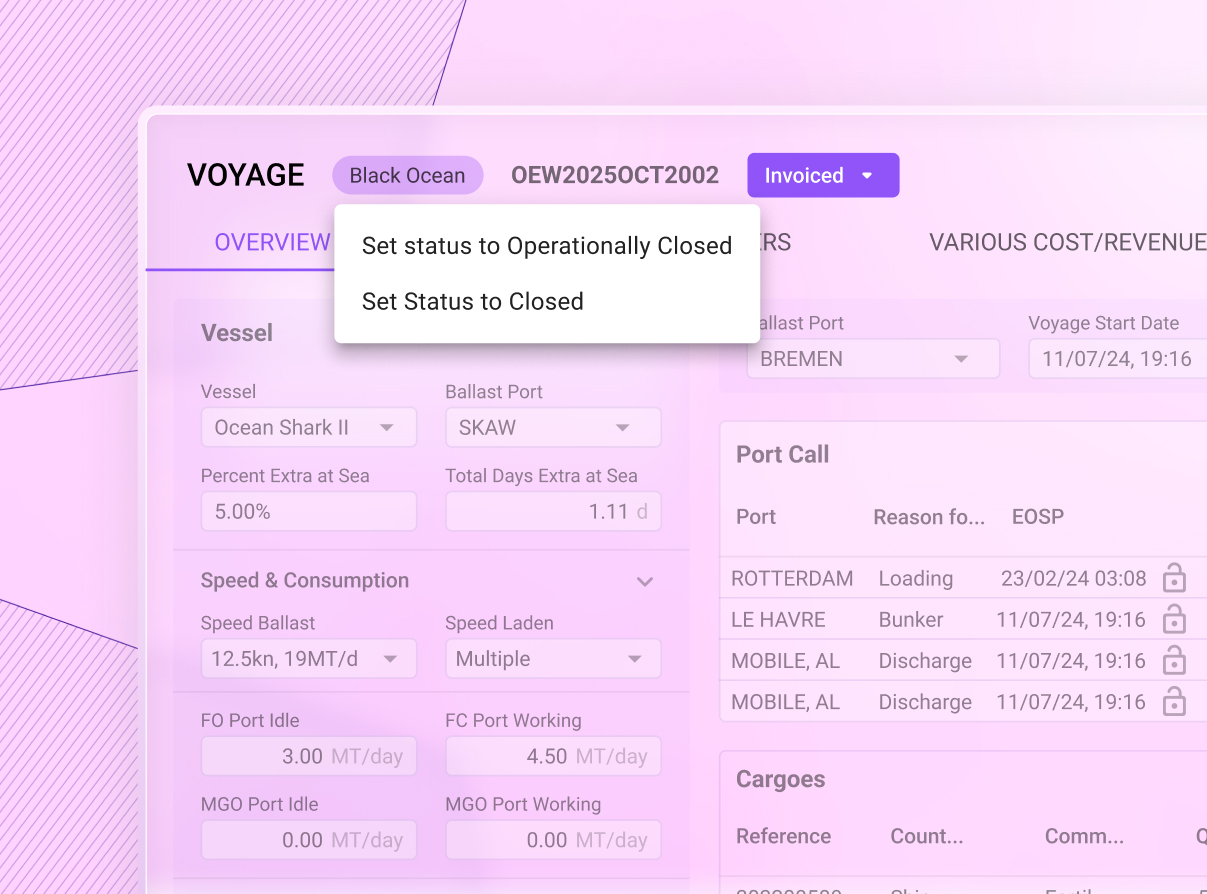
Update schedules, port calls, cargo information, and voyage events as the operation develops, keeping the working plan aligned with what is happening.
Capture operational reality
Record vessel reports, bunker movements, port activity, downtime, and deviations in the voyage record, giving teams the information needed to manage execution.
Keep costs and emissions performance current
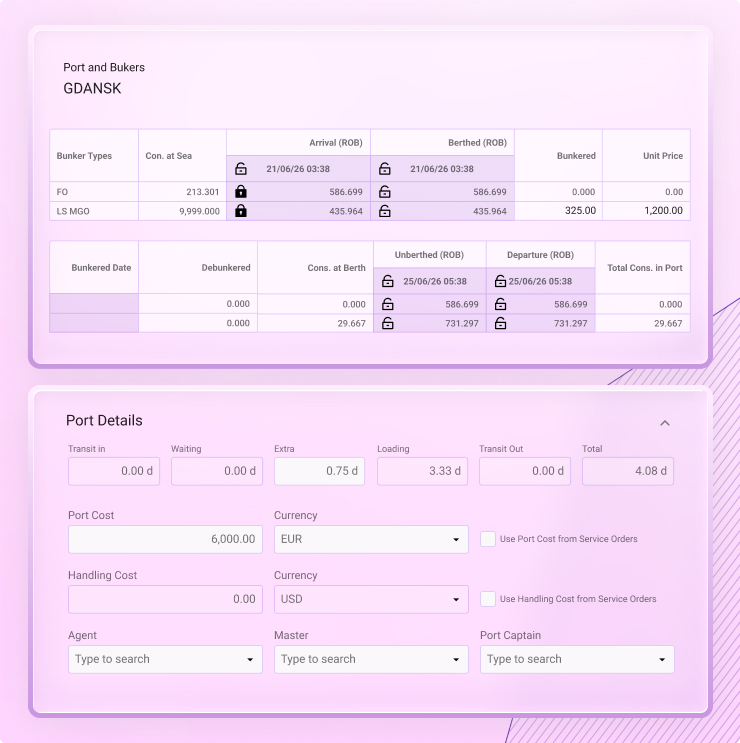
Update voyage costs, fuel consumption, and EU ETS quantities and prices as the voyage develops, so the latest costs are reflected in voyage P&L. Track EEOI as cargo, distance, and consumption data are recorded.
Track projected P&L as conditions change
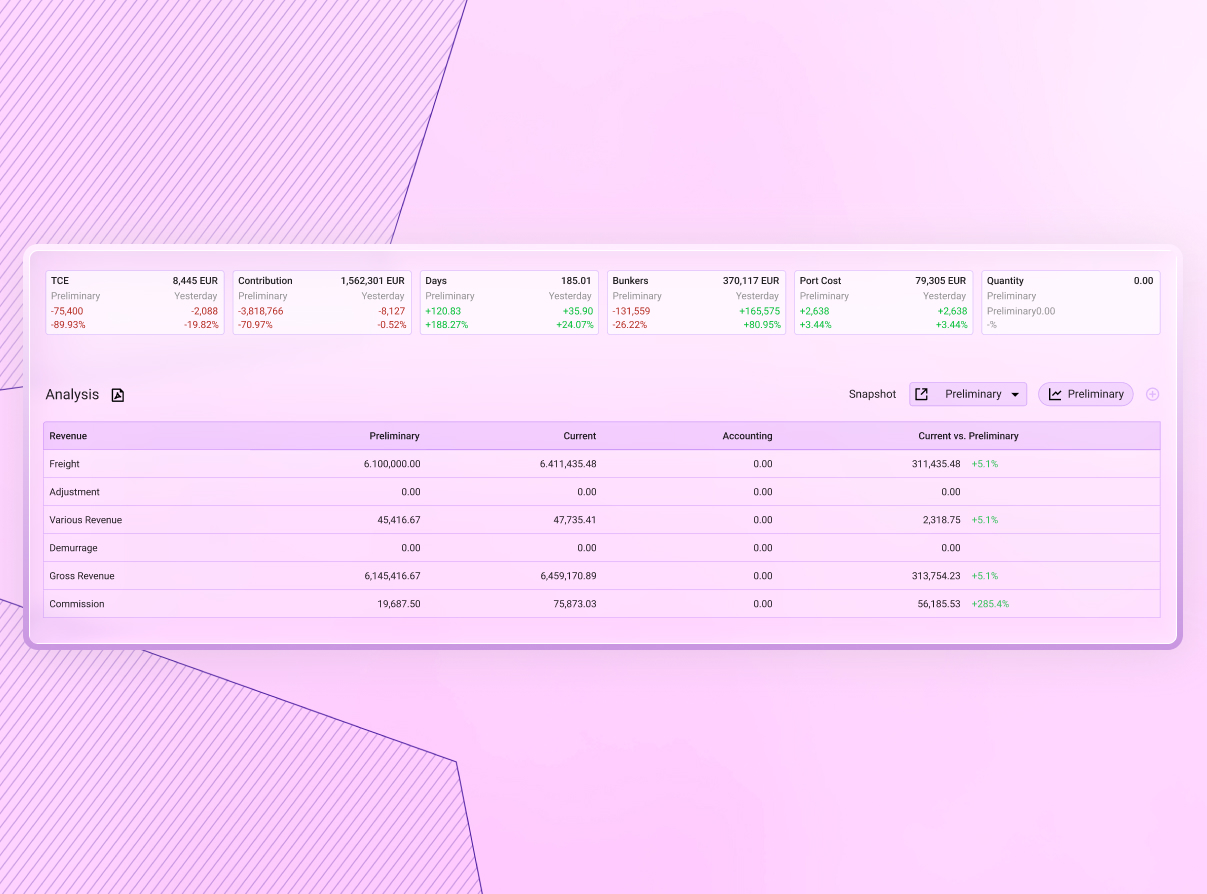
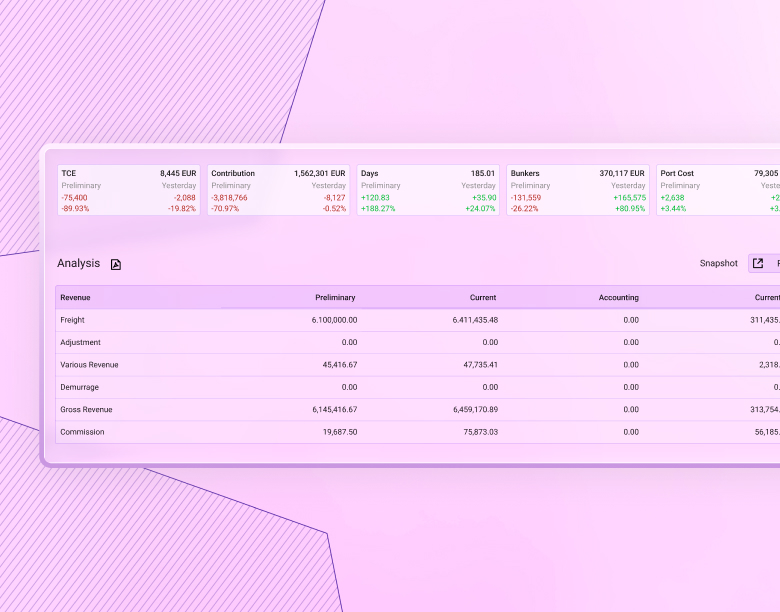
See how changes in time, consumption, costs, and revenue affect the projected voyage result. Use snapshots to understand how P&L has moved since the original estimate.
Settle from a connected voyage record.
Bring the voyage record together. Reconcile the result. Calculate what is owed. Close with confidence.
Calculate claims
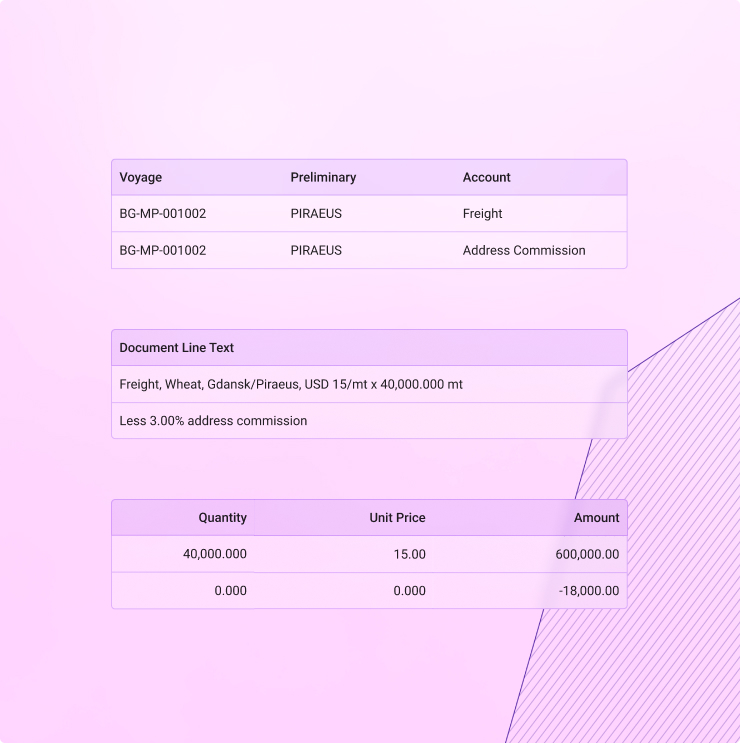
Use connected contractual terms and operational events to support laytime, demurrage, and despatch calculations.
Reconcile the result
Bring together invoices, accruals, port costs, and other voyage revenues and expenses.
Settle and close
Support EU ETS and FuelEU calculations, complete settlement and close the voyage from a traceable record.
Extend the voyage picture across the business.
Plan across the fleet, shape the workspace around each team, stay connected from anywhere, and turn live voyage data into decisions.
Plan across the fleet
Use Fleet Allocation & Scheduling to manage vessel positions, cargo commitments, and schedules in one shared view, and identify opportunities to reduce ballast.
Work together from anywhere
Access the full Sedna VMS from your mobile browser to review and update information wherever work takes you. Add comments, @mention colleagues, and access attachments throughout the system. Keep collaboration connected to the records and workflows it relates to.
Turn voyage data into decisions
Give every team a live view of performance across voyages and fleets. Build and schedule reports and dashboards across commercial, operational, financial, and compliance data, including EU ETS exposure and EEOI, directly in Sedna VMS, or, connect trusted voyage data to Power BI, Tableau, and the Business Intelligence tools your organisation already uses.
Shape the workspace around each team
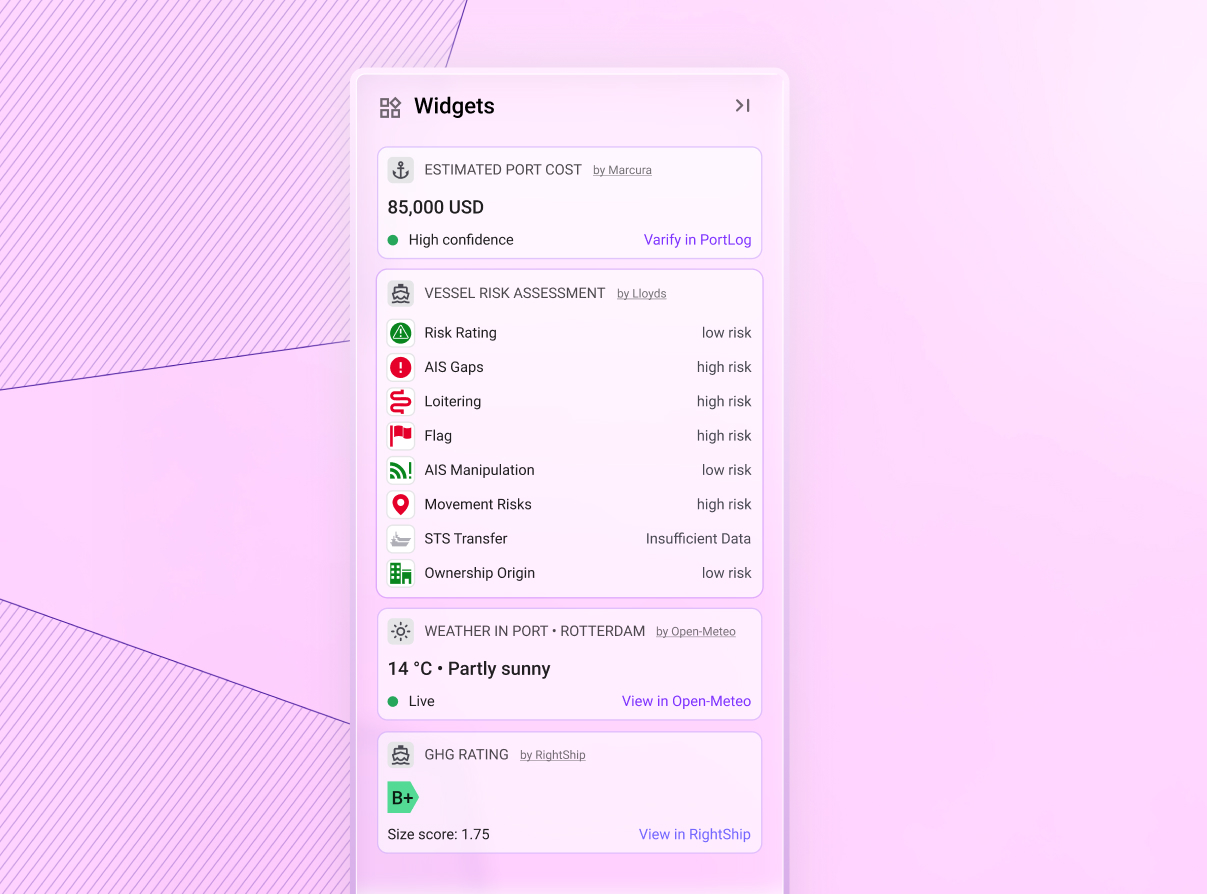
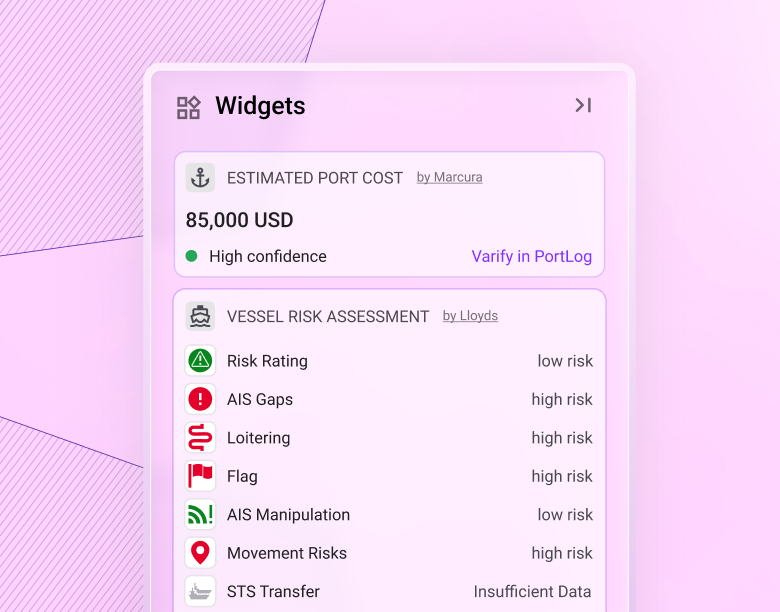
Use configurable widgets and role-specific views to keep the commercial, operational, and financial information each team needs close at hand.


HUMAN EXPERTISE
AI starts with knowing what needs attention
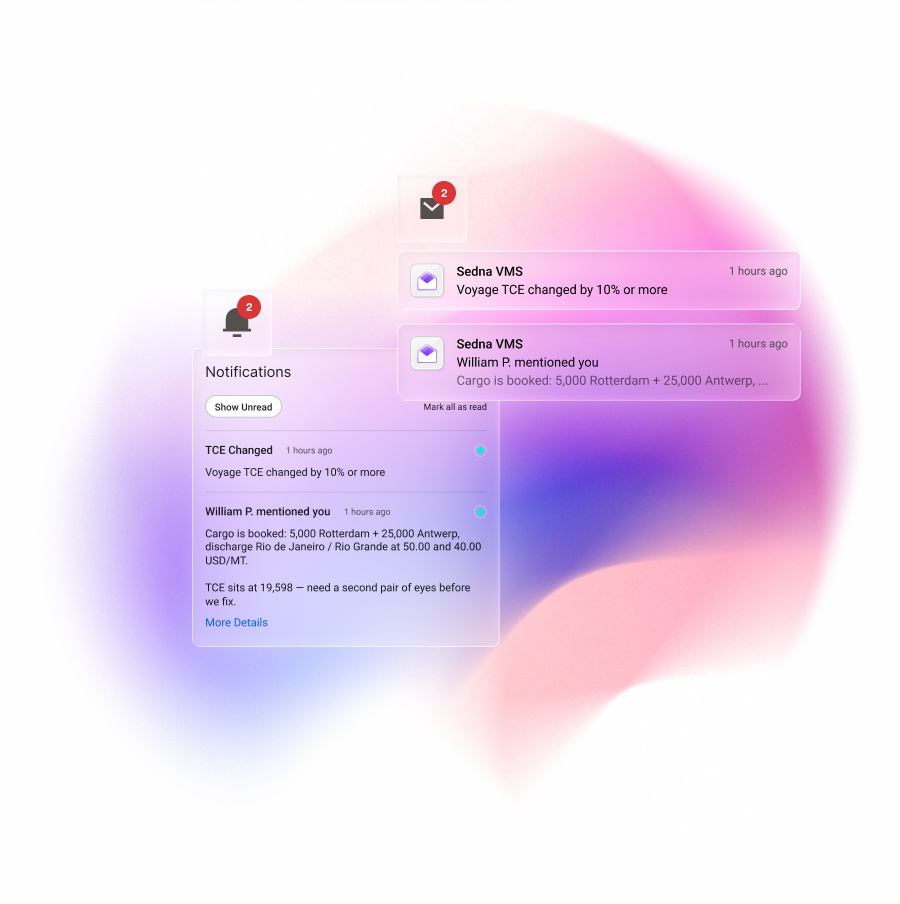
Sedna VMS Alerts helps teams identify important voyage changes and exceptions without needing to search through every voyage. Combined with connected commercial, operational, and financial data, the alerts create a stronger foundation for AI-assisted workflows to reduce manual monitoring and help people focus on what matters.
AI helps bring the right information forward. Human expertise makes the decision.
Complete voyage context, built for operational reality.
Sedna VMS connects the terms, cargoes, port calls, costs, and performance behind all the commercial decisions, from fixture to final settlement. Teams can respond faster, stay aligned, and protect voyage profitability.
Teams can understand what’s happening, see what’s changed, assess the impact, and act before it affects the voyage result.

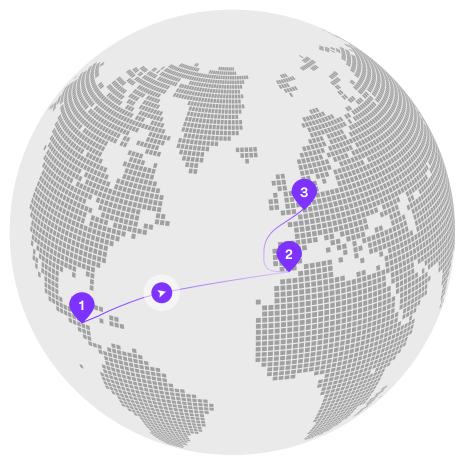
It calculates the shortest route a vessel can actually sail, routing around High-Risk Areas and Emission Controlled Areas by default, and feeds directly into sailing time, fuel consumption, cost and emissions calculations.
The Intelligent Operating System for Shipping
Conversations, voyage records, commercial data, and workflows come together in one live context. Intelligence moves with the work. Teams see what matters, understand what is changing, and make better-informed decisions. That’s why we call Sedna the Intelligent Operating System for Shipping.




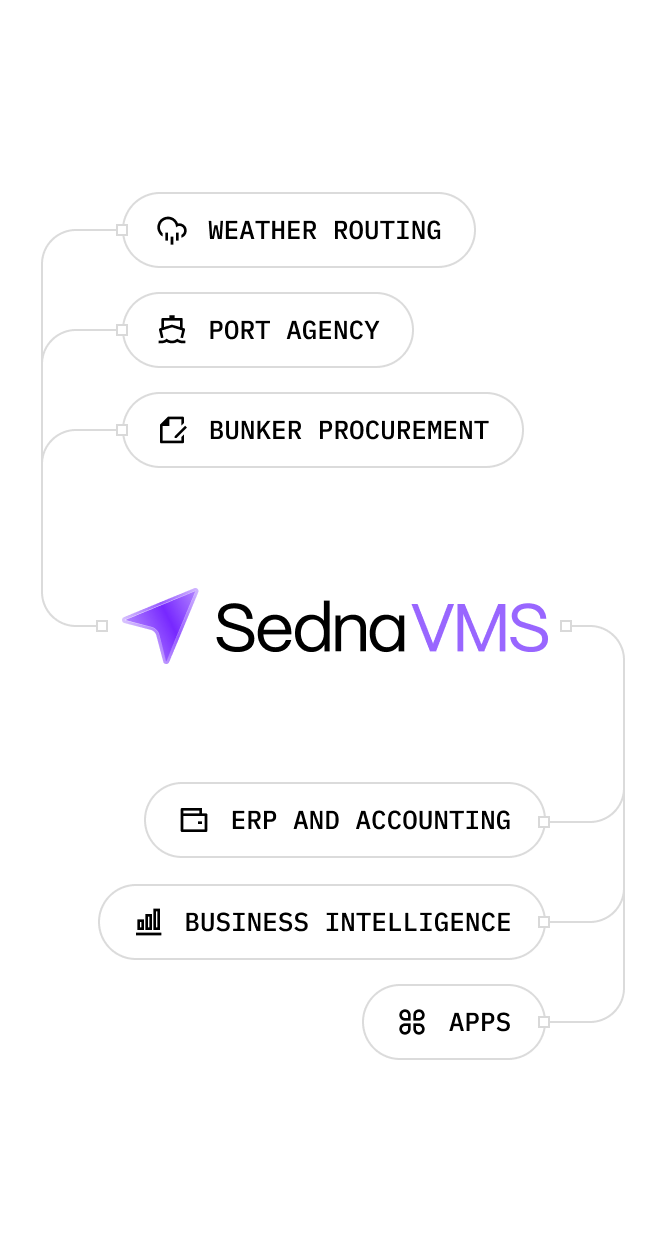
Open architecture
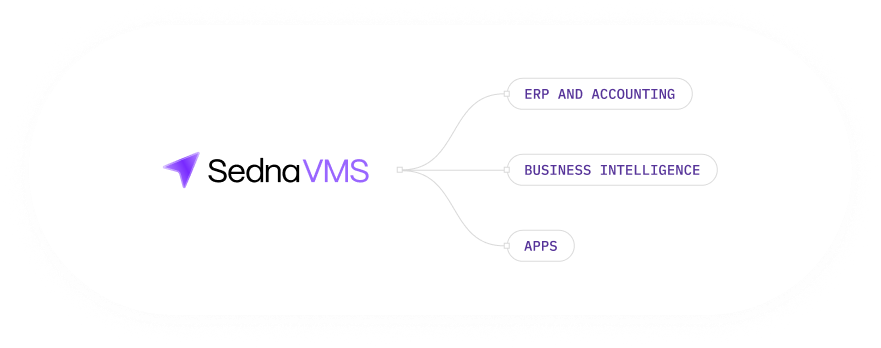
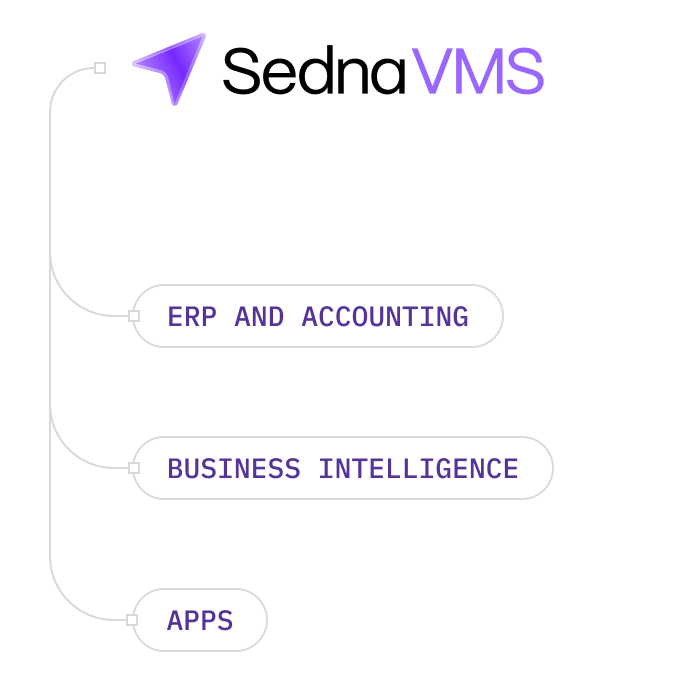
Keep the systems you rely on. Connect the context between them. Sedna VMS is API-first by design, connecting with ERP, accounting, chartering, operations, and specialist maritime systems. One connected voyage picture.
One voyage record. A clearer answer for every team.

Chartering
Know the economics. Commit with confidence.

Operations
See what’s changing. Act before it becomes a problem.

Finance
Know the result. Reconcile. Close.

Management
See where performance is moving. Know why.

IT
Connect your ecosystem. Stay in control.
The way your business trades
Manage spot and contract business across owned, time-chartered and pooled vessels. Forecast COA commitments, create planned voyages and evaluate vessel allocations across the fleet.
Model port stays using working and idle fuel-consumption assumptions, relet cargoes when another owner will carry them, and keep laytime, port costs and projected voyage P&L connected as the voyage develops.

Build and operate complex voyages with multiple cargoes, parcels and load and discharge ports. Model vessel intake at each port call, combine liner and free-in/out terms, and allocate handling costs accurately across cargoes and transshipments.
Manage preshipments, transshipments and cargo transfers across voyages. For semi-liner and COA business, plan cargo commitments and vessel schedules across the fleet, then keep shipments, laytime and related claims connected to the voyage record.

Manage time charters, flexible rate structures and laytime across fully and semi-refrigerated gas carriers transporting LNG, LPG, petrochemical gases and CO₂.
Account for cargo-cooling fuel consumption and keep boil-off, fuel use, vessel performance and voyage economics connected throughout the charter.

Support reefer and heavy-lift operations with multiple cargoes and parcels, complex port rotations, Bills of Lading and cargo documentation in one connected voyage record.
Model available cargo capacity at each port call, allocate terminal and handling costs to the right cargo, and manage cargo transfers and transshipments while keeping schedules, costs and voyage P&L connected.
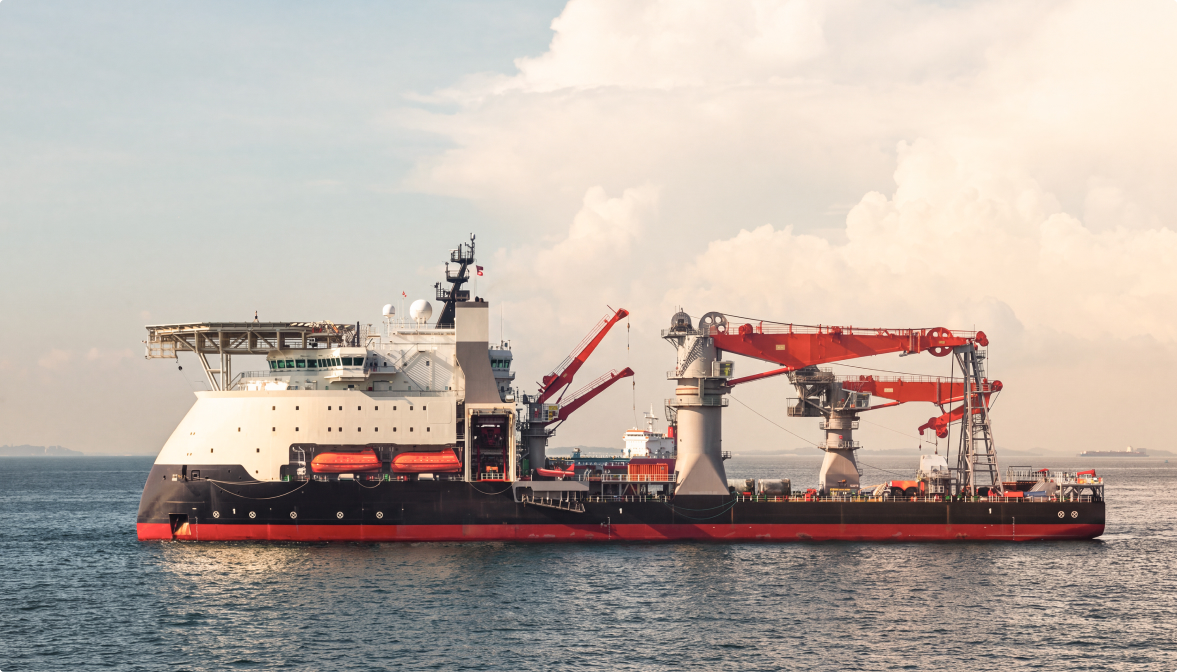
Plan flexible port rotations and round voyages using ports and offshore locations, with routing through major canals and around high-risk areas.
Model Worldscale, lump-sum and overage freight structures, account for heating and cleaning consumption, and apply hourly or reversible laytime terms. Keep fuel consumption, voyage costs and projected P&L connected as the voyage develops.
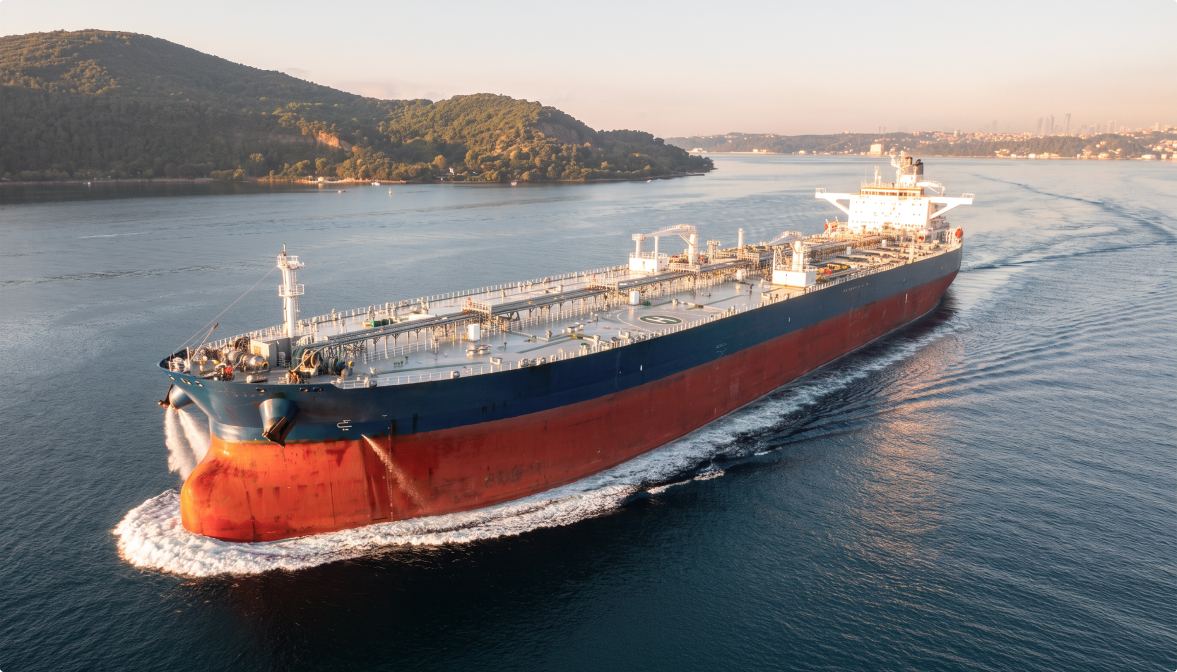
Manage parcel cargoes and complex charter parties across multiple charterers. Group related parcels and apply specialised laytime arrangements while keeping cargo terms and voyage economics connected.
Use COA templates to create parcels consistently and balance contractual commitments and laycans against spot-market opportunities when planning the most profitable cargo mix.

Manage dry and liquid cargo operations across the same fleet, with the flexibility to plan different voyage types as commitments and market conditions change.
Use Fleet Allocation & Scheduling to compare allocation scenarios, coordinate vessel positions and cargo commitments, and identify opportunities to improve round voyages and reduce ballast legs.
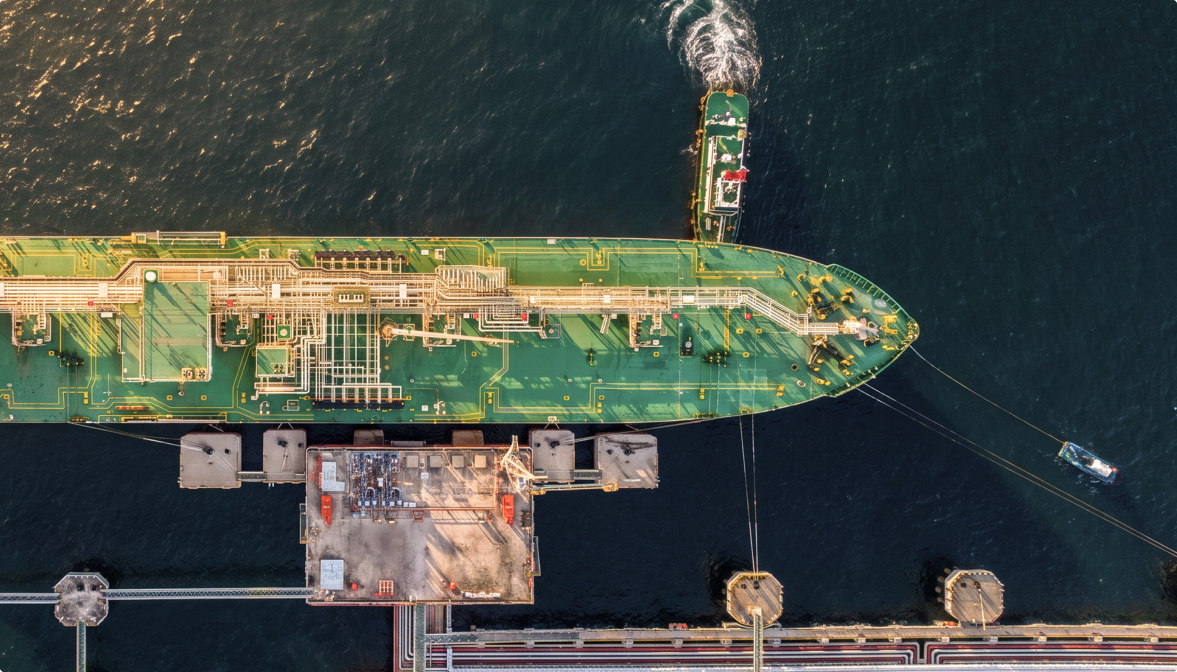
Manage time-charter contracts and day-to-day operations for offshore supply vessels and other specialised, non-cargo fleets.
Bring contract terms, vessel activity, fuel consumption, costs and voyage P&L together, giving teams a clearer view of operational and commercial performance.
“We couldn’t fully rely on system outputs without verifying them manually. Now we have a system we can trust - reliable, intuitive, and much easier to work with. The workflow has improved tremendously, and the time we’ve saved is incredibly valuable.”
Chartering Manager










FAQ
You have questions?
We have answers.
What is Sedna VMS?
Sedna VMS is a Voyage Management System (VMS) for commercial shipping. It connects the commercial, operational, and financial information behind every voyage. From fixture and voyage estimation through execution, monitoring, settlement and closure, Sedna VMS gives shipping teams one connected voyage record to plan, manage, and understand performance.

What does a Voyage Management System do?
A Voyage Management System helps shipping companies plan, execute, monitor, and settle vessel voyages. It connects information such as charter party terms, cargoes, voyage estimates, routes, port calls, fuel consumption, operational events, revenues, costs, emissions, and financial results throughout the voyage lifecycle. Sedna VMS brings this information together in one connected voyage record
Who uses Sedna VMS?
Sedna VMS is designed for shipping teams across chartering, operations, finance, and management. Chartering teams can estimate and compare voyages before committing. Operations teams can monitor execution and respond to change. Finance teams can reconcile and settle voyages. Management teams can understand voyage and fleet performance from a shared source of truth.
Which shipping segments does Sedna VMS support?
Sedna VMS supports the complex voyage structures and workflows used across commercial shipping, including dry bulk, tankers, and other shipping operations. It can manage multiple cargoes, parcels, contracts, port calls, and pricing structures while keeping their relationship to the overall voyage result.
How does Sedna VMS help manage voyage profitability?
Sedna VMS helps shipping teams manage voyage profitability by connecting voyage estimates, charter party terms, revenues, costs, fuel consumption, and operational performance in one voyage record. Teams can compare estimated and actual results, monitor TCE, margin, emissions, and voyage P&L, and understand how changes during execution affect the projected voyage result.
How does Sedna VMS keep the commercial picture connected as a voyage changes?
Sedna VMS keeps the original voyage estimate, commercial terms, and voyage plan connected to operational events throughout execution. As delays, consumption, port events, and other conditions change, shipping teams can see the impact on time, costs, fuel consumption, emissions, TCE, and voyage P&L from the same voyage record.
Can Sedna VMS handle complex voyage structures?
Yes, Sedna VMS is built to handle complex voyage structures. The types of complex voyage structures that Sedna VMS supports includes: multiple cargoes, parcels, contracts, port calls, and pricing arrangements. These complex voyage structures remain connected to the voyage record. This helps chartering, operations, and finance teams understand how individual commercial and operational events contribute to the overall voyage result.
How does Sedna VMS support voyage execution?
Sedna VMS keeps the original commercial plan and voyage estimate in view as execution develops. Teams can capture operational events, vessel reports, bunkers, and consumption, compare actual performance with expectations, understand the impact on the voyage result, and act while there is still time to protect performance.
How does Sedna VMS support voyage closure and settlement?
Sedna VMS supports voyage settlement and closure by connecting operational events, contractual terms, port costs, invoices, accruals, revenues, and expenses within the voyage record. This supports laytime, demurrage and despatch calculations, reconciliation, emissions-related calculations, and final voyage closure from an accurate and traceable record.
How does Sedna VMS support EU ETS and FuelEU Maritime compliance?
Sedna VMS supports EU ETS and FuelEU Maritime calculations within the voyage record, connecting emissions data and associated costs to voyage performance as the voyage develops. FuelEU calculations use fuel consumption and greenhouse gas intensity, with support for applicable pooling deductions.
Can Sedna VMS integrate with other shipping and business systems?
Yes. Sedna VMS is API-first by design and can connect with ERP, accounting, chartering, operations and specialist maritime systems. REST APIs and webhooks allow voyage, commercial, operational and financial data to connect across an existing technology stack, helping teams work from consistent voyage information without creating additional data silos.
What is the difference between a Voyage Management System and an ERP?
An ERP manages broad financial and business processes across an organisation. A Voyage Management System is purpose-built for the commercial and operational management of individual voyages, connecting fixtures, charter parties, cargoes, voyage estimates, routes, port calls, consumption, costs, revenues, and settlement around the voyage result. Sedna VMS can integrate with ERP and accounting systems, allowing each system to perform the role it is designed for.
What information does a Voyage Management System track?
A Voyage Management System can track commercial, operational, and financial information including charter party terms, cargoes, voyage estimates, routes, port calls, bunkers and fuel consumption, operational events, revenues, costs, emissions, laytime, demurrage, despatch, accruals and final voyage results.
Can Sedna VMS connect with Sedna Email and Sedna Pre-Fixture?
Sedna VMS is part of the wider Sedna platform that we call the Intelligent Operating System for Shipping. Sedna Email provides communication context, Sedna Pre-Fixture supports opportunity discovery and commercial decision-making, and Sedna VMS manages voyage execution and financial performance. Together, they connect context across communication, commercial decision-making, and voyage execution, supporting a more connected operating picture for shipping teams.
Book a Sedna VMS demo
See how Sedna VMS can bring your voyage data, workflows, and decisions together.
Request a VMS demo →